
Feasibility
Glamping Feasibility Study: Testing a Glamping Project Before You Build
Glamping pro formas are unusually easy to make look good. High nightly rates, modest unit costs, appealing photography. A feasibility study is where those numbers get pressure-tested against the actual land, the actual market and the actual labor.
The short answer
A glamping feasibility study tests whether a location can command the nightly rate glamping requires, and whether the site, unit mix and operating model can deliver it profitably. It has to weigh three things together — the site, the story and the operating math — because a glamping project fails if any one of them does not hold, no matter how strong the other two look.
What gets tested
- Achievable nightly rate
- Not the rate a celebrated destination property charges — the rate this location, with this drive-time market, this view and this story, can actually hold across the year.
- Unit type and unit mix
- Safari tents, yurts, domes, cabins, park models or a blend. Each carries a different capital cost, lifespan, rate ceiling, maintenance burden and seasonal capability.
- Siting and yield
- Where units can go for privacy, view and arrival experience, how many the land supports at that spacing, and what it costs to service those positions.
- Season length and four-season capability
- How many nights a year are genuinely sellable, and what insulation, heating and freeze protection would be required to extend that.
- Operating model and labor
- Housekeeping and turnover per stay, staffing, guest services, food and beverage if any, and reservation and revenue management. This is where optimistic glamping models usually break.
- Permitting reality
- How the local jurisdiction classifies your chosen unit type, and what that means for timeline, cost and what is even allowed.
- Pro forma and sensitivity
- A multi-year plan with rate, occupancy, season and expense assumptions visible, plus what happens when each one moves.
Standalone resort, or an addition to an existing park
A standalone glamping resort has to build its market, its access, its infrastructure and its operating team from nothing, and carry all of it on a small number of keys. That is a demanding pro forma, and it usually requires a genuine destination draw.
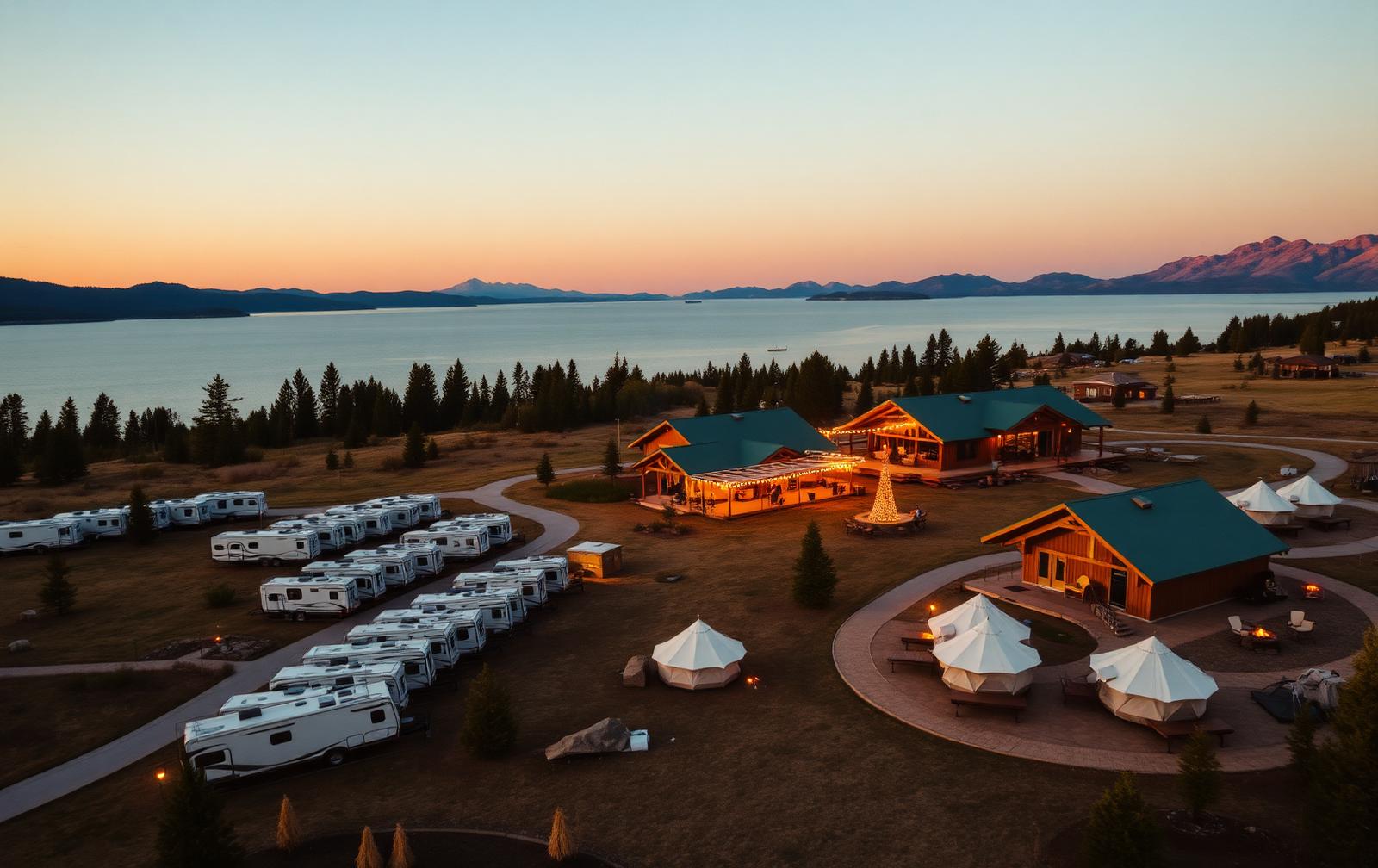
Adding glamping to an existing campground or RV resort is a different and often stronger proposition. Access, utilities, staff, reservation systems and an existing guest base already exist, so the incremental investment per unit is lower and the risk is smaller. The feasibility question becomes placement, mix and whether the operation can absorb the added service load.
The mistakes this study is designed to catch
- Borrowing nightly rates from destination markets that do not resemble the site.
- Modeling glamping revenue against campground-style operating expenses.
- Siting units for construction convenience rather than for the experience guests pay for.
- Choosing a unit type before checking how the jurisdiction will classify it.
- Assuming a season that the units, as specified, cannot actually deliver.
Common questions
How many glamping units do I need for it to work?
It depends on rate, season length and how much fixed cost the project carries. Too few units cannot support staffing and overhead; too many can outrun the market's demand. Unit count is an output of the analysis, not a starting assumption.
Can glamping be added to an existing RV park or campground?
Yes, and it is one of the most frequent requests RDBA receives. Existing infrastructure, staff and guests lower both the cost and the risk — provided siting, unit mix, four-season use and the operating load are worked out before units are ordered.
Is glamping still a good investment?
It can be, where the site earns the rate and the operation is staffed for high-touch lodging. It performs poorly where units are treated as a product to install rather than a hospitality business to run. That distinction is what the feasibility study is for.
What experience does RDBA bring to glamping specifically?
Ron D. Beard is an architect, developer and operator focused on outdoor hospitality for more than three decades, and a member of the American Glamping Association who has been invited to present at Glamping Show Americas. RDBA's glamping work includes cabins and yurts at Haven Hills Campground & Resort.
How RDBA Outdoor Consulting helps
Keep reading
Next step
Get an experienced outside view of the whole project.
Before you buy, build, expand or invest more into an underperforming property, talk it through with someone who has planned, built and operated these businesses.