
Cost guide
How Much Does It Cost to Build a Campground?
Campgrounds tend to look less expensive than RV resorts until the infrastructure is priced. Grading, water, wastewater, power distribution and bathhouses arrive whether the sites are gravel tent pads or paved full-hookup sites. Here is how the cost actually breaks down.
The short answer
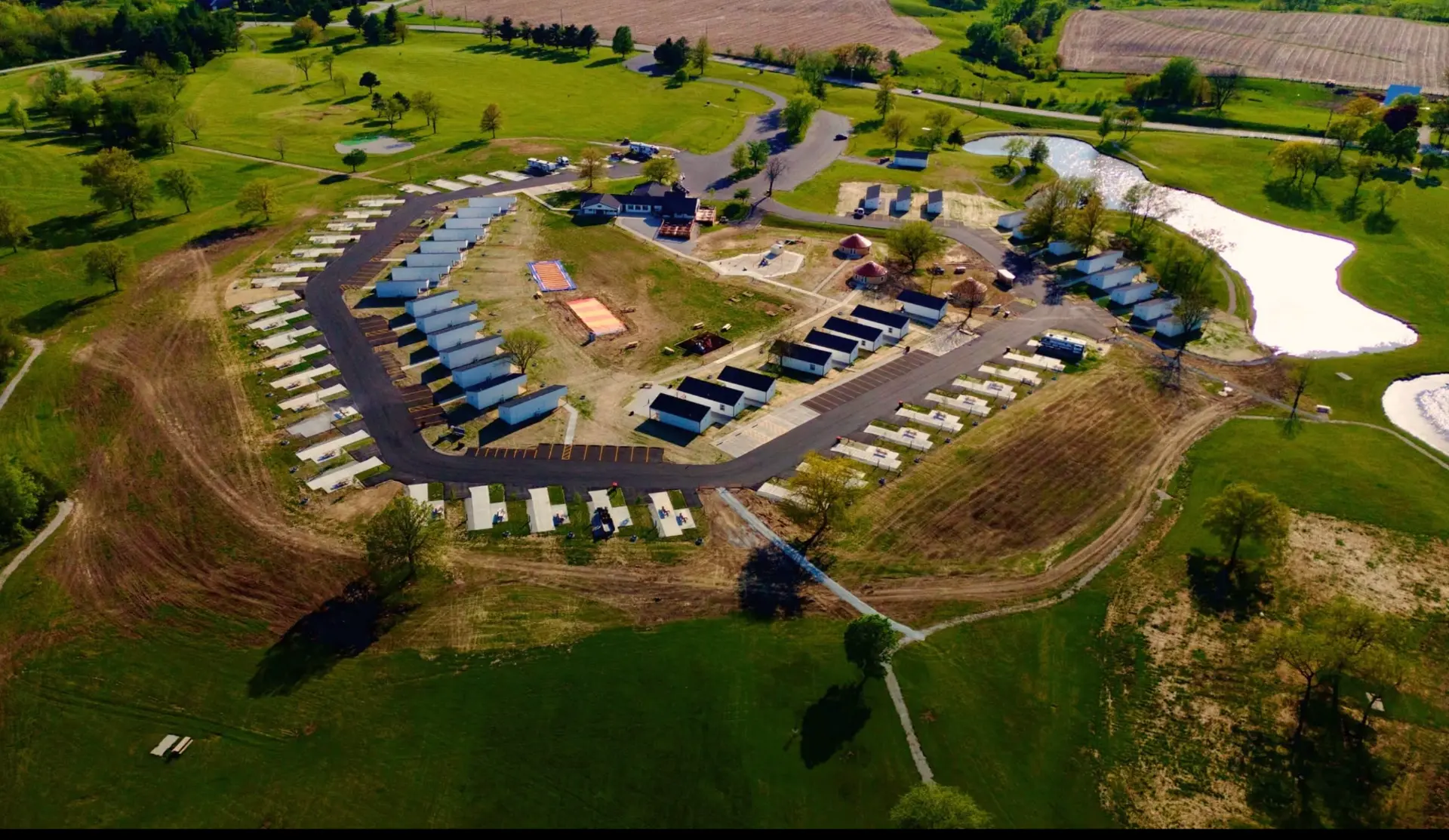
Campground development cost is driven by infrastructure and yield rather than by the campsites themselves. Utilities, earthwork, drainage, roads and required buildings such as bathhouses typically dominate the budget, and the number of usable sites the land produces spreads all of it. A mixed campground carrying tent sites, RV sites and cabins costs differently again, because each lodging type has its own utility and servicing demands.
The main cost categories
- Land usability
- Tree cover, slope, soils, rock, wetlands and floodplain determine how much of the parcel can carry sites, roads and buildings. Wooded land often reads as an asset for guest experience and a cost for construction — both are true.
- Water and wastewater
- Municipal connection, well, septic or on-site treatment are radically different budgets and radically different permitting timelines. This choice frequently decides whether a campground project is viable at all.
- Power distribution
- Service capacity and the length of distribution runs across a spread-out campground add up quickly, particularly where 50-amp RV sites are mixed with cabin loads.
- Roads, pads and drainage
- Internal roads have to carry RV traffic and stay passable in weather. Stormwater management is a code requirement and a real construction cost.
- Bathhouses and service buildings
- Any campground with tent, cabin or partial-hookup sites needs bathhouse capacity, along with laundry, a store or check-in building, and maintenance space. These are conventional buildings at conventional building cost.
- Site and lodging mix
- Tent sites, RV sites and cabins carry different construction costs and different nightly rates. The mix is a revenue decision as much as a cost decision.
- Amenities and guest experience
- Pool or splash pad, playgrounds, pavilions, trails, activity space and event areas. These drive rate and repeat visits, so they earn their cost — but only when scaled to what the market pays.
- Soft costs and contingency
- Survey, geotechnical, civil engineering, architecture, permits, impact fees, financing costs and a genuine contingency for below-ground surprises.
Build cost and revenue are one problem
The useful question is not what a campground costs, but what cost this campground's revenue can service. That means establishing achievable rate and occupancy for the location and the guest it serves, then sizing the build to it.
Projects get into trouble when the plan is drawn first and the economics are checked last. By then the layout has already fixed the site count, the infrastructure runs and the amenity package — which is to say it has already fixed the cost.
Where campground budgets go wrong
- Underestimating wastewater, then discovering the permitting path late.
- Committing to land before a site-yield study shows how many sites it truly supports.
- Building amenities suited to a higher nightly rate than the market will pay.
- Phasing so that phase one cannot fund phase two.
- Skipping the market review and relying on personal enthusiasm for the location.
Common questions
Is a campground cheaper to build than an RV park?
Not reliably. Tent and cabin sites need less pad and utility work per site, but campgrounds usually require more bathhouse capacity and more building area, and they often sit on more difficult land. The infrastructure, not the site type, decides the budget.
Should I add cabins or glamping units to keep revenue up?
Often yes — alternative lodging can raise average nightly rate and extend the season, and it appeals to guests who do not own an RV. But it changes utilities, housekeeping, servicing and staffing. The operating math has to be checked before the units are ordered.
How long does it take to build a campground?
The construction itself is usually not the long part; entitlement, permitting and utility approvals are. Timelines vary widely by jurisdiction, which is why the permitting path should be understood before the land closes.
What does RDBA do on a campground development?
Feasibility and financial strategy, masterplanning and site design, pre-civil utility and grading intent, construction strategy and owner representation, and operations planning for opening. Ron D. Beard is an architect who has also developed and operated these properties, so the plan is tested against how it will actually run.
How RDBA Outdoor Consulting helps
Keep reading
Next step
Get an experienced outside view of the whole project.
Before you buy, build, expand or invest more into an underperforming property, talk it through with someone who has planned, built and operated these businesses.