
Cost guide
How Much Does It Cost to Build a Glamping Resort?
Glamping attracts developers because the unit prices look approachable and the nightly rates look strong. Both can be true, and projects still fail — usually because the infrastructure behind each unit, and the labor behind each stay, were never costed. Here is the honest picture.
The short answer
The glamping unit is rarely the expensive part. Getting water, wastewater, power, an access path and a deck or platform to each unit usually costs more than the tent, yurt, dome or cabin sitting on it — and the finish level guests expect at a given nightly rate drives cost further. Four-season operation raises it again, because insulation, heat and freeze protection are engineering decisions, not accessories.
What the budget really contains
- Unit type and quality
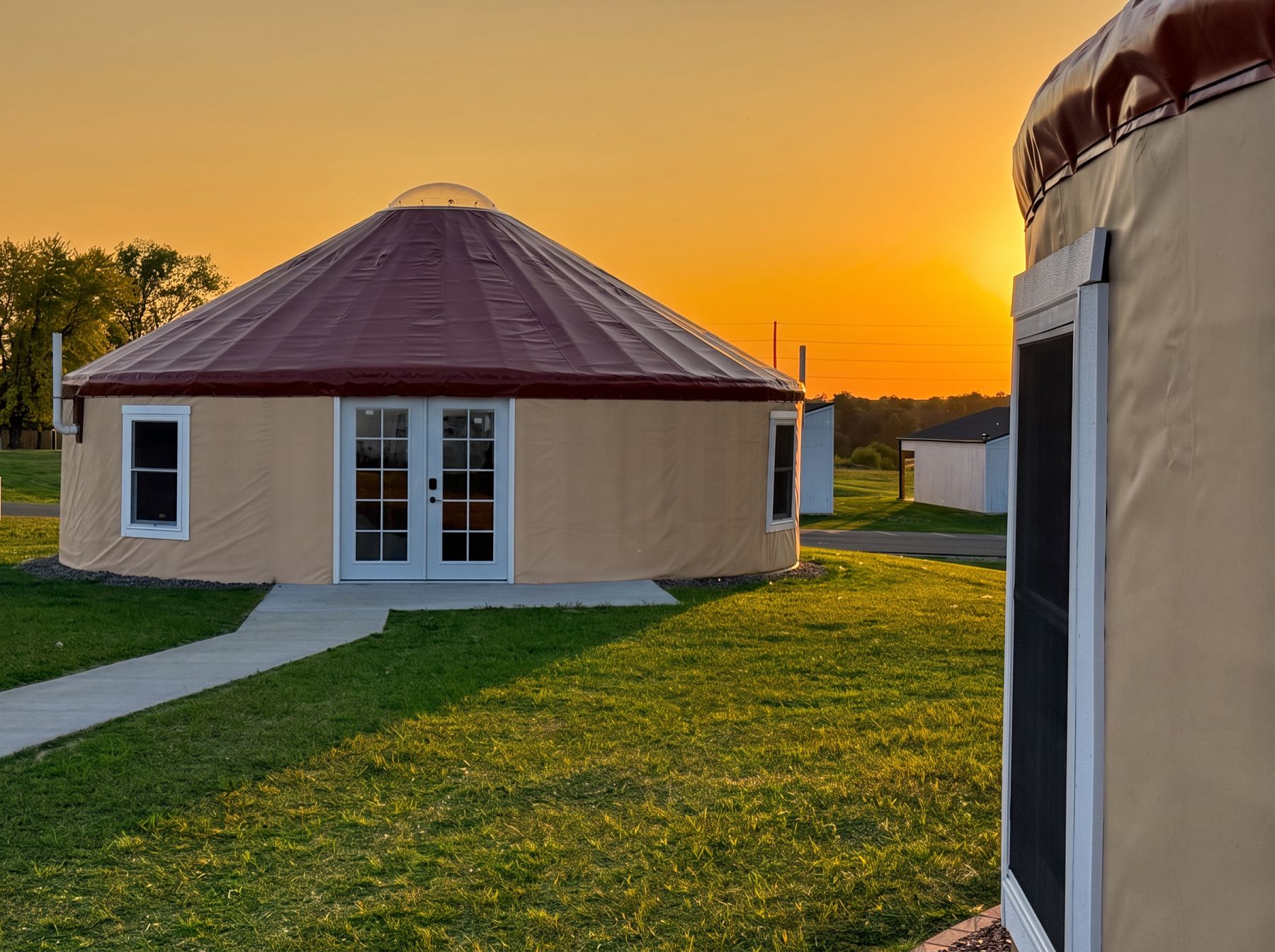
- Safari tents, yurts, geodesic domes, cabins, park models and tiny homes span an enormous range in price, durability, expected lifespan and the rate they command. The cheapest unit is rarely the best value once replacement cycles are counted.
- Platforms, decks and access
- Nearly every unit needs a level platform or deck, a path guests can use at night and in weather, and often screening for privacy. On sloped or wooded land this can rival the unit cost.
- Utilities to each unit
- Private bathrooms mean water supply and wastewater at every unit. Power for heat, cooling, lighting and hot water follows. Spread-out, secluded siting — the thing guests pay for — increases every run.
- Bathhouse alternative
- Shared bathhouses lower per-unit cost significantly but also lower the achievable nightly rate. This is one of the most consequential early decisions in a glamping project.
- Four-season capability
- Insulation, heating, freeze-protected water lines, snow loading and wind rating decide whether the resort earns revenue year-round or sits idle for months. Retrofitting this later is expensive.
- Amenities and arrival experience
- Fire pits, hot tubs, a welcome or check-in building, food and beverage, event space, trails and lighting. Glamping guests are paying for experience, so these are revenue drivers rather than extras — within reason.
- Furnishing and turnover
- Beds, linens, furniture, kitchenettes and decor are part of the capital cost, and they wear. Housekeeping and turnover labor per stay is far closer to a hotel than to an RV site, and it belongs in the pro forma from day one.
- Soft costs and permitting
- Glamping units sit awkwardly in many building and zoning codes. Whether a unit is treated as a structure, a temporary use or a recreational vehicle changes permitting, timelines and cost — sometimes dramatically.
Where glamping projects most often go wrong
The recurring failure is not the units. It is the assumption that strong published nightly rates from a destination market will hold at a site an hour from nowhere with no story, no view and no amenity. Rate is earned by site, story and experience together.
The second failure is labor. High-rate, high-touch lodging with daily turnover needs staffing that a campground does not. Projects that model glamping revenue with campground-style operating expenses look excellent on paper and disappoint in operation.
The sequence that protects the budget
- Test the market and the rate the location can genuinely command.
- Decide unit type, unit count and private-versus-shared bathrooms as one linked decision.
- Site the units for privacy, view and story — then price what servicing those positions costs.
- Model operations, including housekeeping, seasonality and turnover labor.
- Confirm the permitting treatment of your chosen unit type before ordering anything.
Adding glamping to an existing park
This is one of the most frequent requests, and it is often the strongest version of a glamping project: the access road, utilities, staff, reservation system and guest base already exist, so the incremental cost per unit is lower and the risk is smaller.
It still needs the same discipline. Placement, unit mix, four-season use and the effect on housekeeping and staffing all have to be worked out before units arrive, or the addition quietly drags on the operation it was meant to lift.
Common questions
Are glamping units cheaper than cabins?
The unit itself usually is. Total delivered cost per key often is not, once platforms, access, utilities, furnishing and four-season capability are included. Cabins also tend to last longer and need less replacement, which matters over a hold period.
Do glamping units need private bathrooms?
It depends on the rate you intend to charge. Private bathrooms raise both cost and achievable rate; shared bathhouses lower both. It is a positioning decision that should be made from the market analysis, not from the construction budget alone.
Can a glamping resort operate year-round?
Yes, with units and infrastructure designed for it — insulation, heating, freeze protection and appropriate structural ratings. Four-season capability is generally far cheaper to build in at the start than to retrofit.
How does RDBA approach glamping cost?
By working the site, the unit mix and the operating math together, because in glamping those three decisions are the same decision. RDBA has planned and built glamping and alternative lodging alongside RV and campground development, including cabins and yurts at Haven Hills Campground & Resort.
How RDBA Outdoor Consulting helps
Keep reading
Next step
Get an experienced outside view of the whole project.
Before you buy, build, expand or invest more into an underperforming property, talk it through with someone who has planned, built and operated these businesses.